

When modeling your business using metric trees, you will want to focus on three vital types of metric relationships:
1. Decomposing a Metric into Component Metrics
2. Slicing a Metric into Segmented Metrics
3. Modeling Unknown Relationships
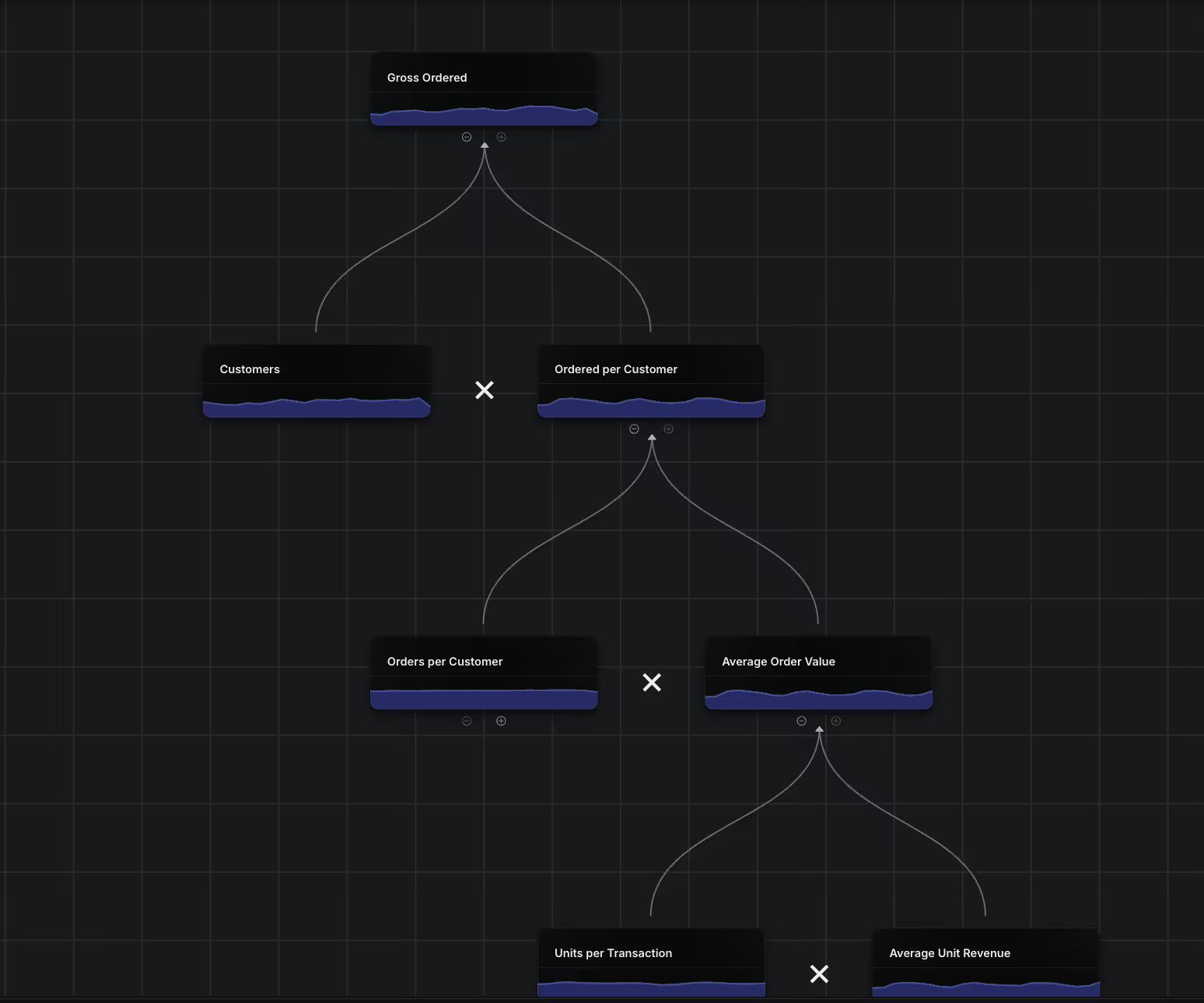
Equations can define explicit relationships between component metrics. Canonical examples are:
Explicitly capturing these relationships across component metrics enables powerful diagnostics and exploratory analysis.
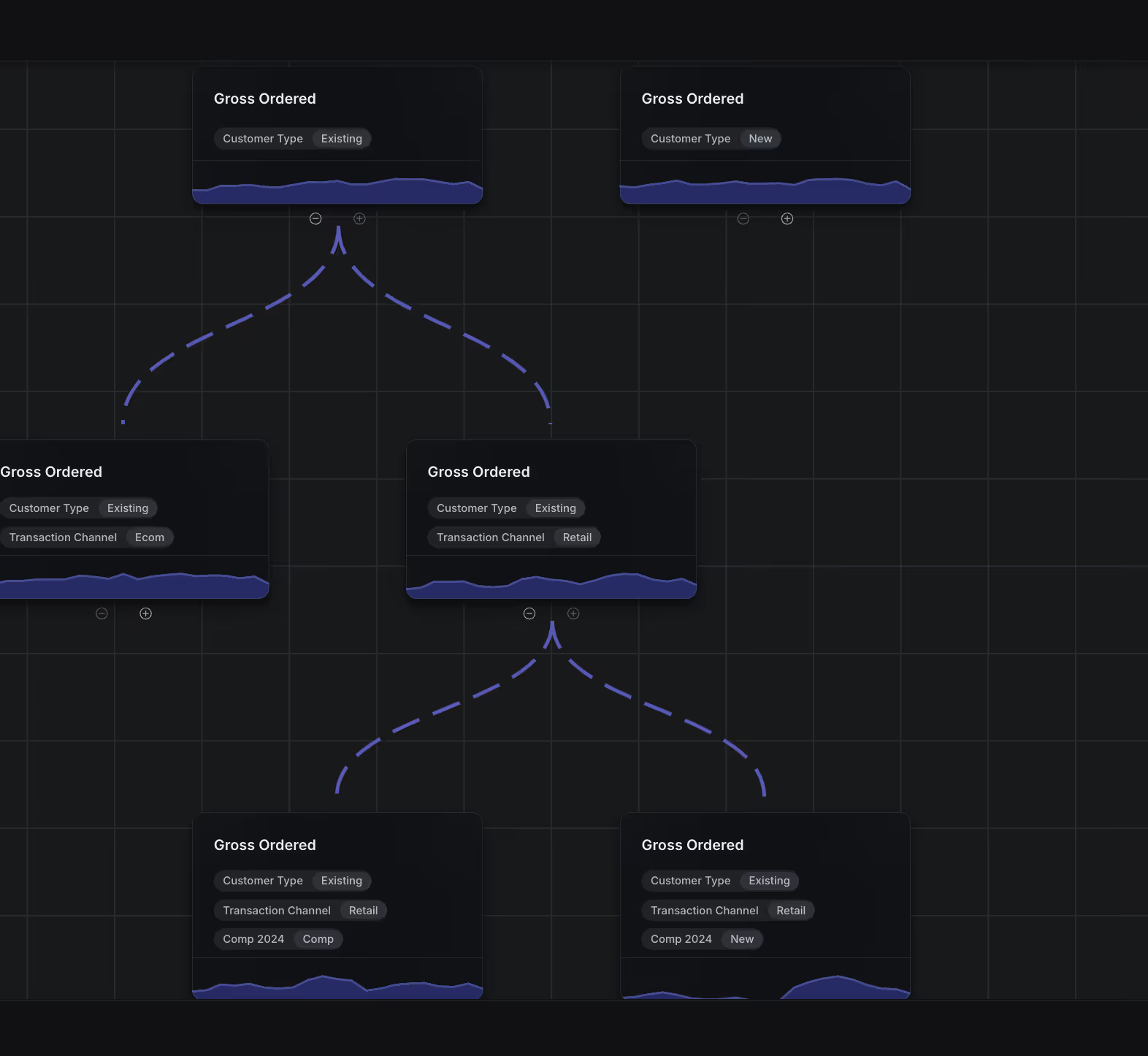
Segments represent the dimensional breakdowns of a metric. This is a common practice in dashboards where metrics are sliced by various dimensions. Examples include:
These segments allow you to analyze metrics from different perspectives and uncover patterns.
By definition, known unknowns are connections between metrics that are intuitively recognized as existing but are not yet quantified or fully understood.
A classic example is the impact of customer service on retention. While we know that better customer service likely improves retention, quantifying this impact precisely can be challenging.
By integrating these three types of metric relationships, you can create metric trees that effectively capture your business processes. These trees become valuable tools for alignment and operational clarity, driving better operational decision-making and strategy development.