
-p-800.avif)
Data and Business teams operate in two different domains that speak different languages.
For example, data analysts speak in terms of datasets, keys, joins, columns, filters, and aggregations, while data engineers speak in terms of pipelines, dependencies, and lineage.

On the other hand, business domains use metrics, drivers, levers, segments, goals, tactics, strategy, initiatives, and features.
Being data-driven or data-informed requires effectively translating between these two domains. This involves cross-pollinating data and business teams to align them with the same end goals, which is easier said than done.
However, frameworks and tools can serve as powerful collaborative agents, much like engineering teams and how they interface with the business.
One such framework that can help is metric trees, which maps the processes by which the business operates and serves its customers - including the inputs, outputs, relationships, entities involved, and their states.
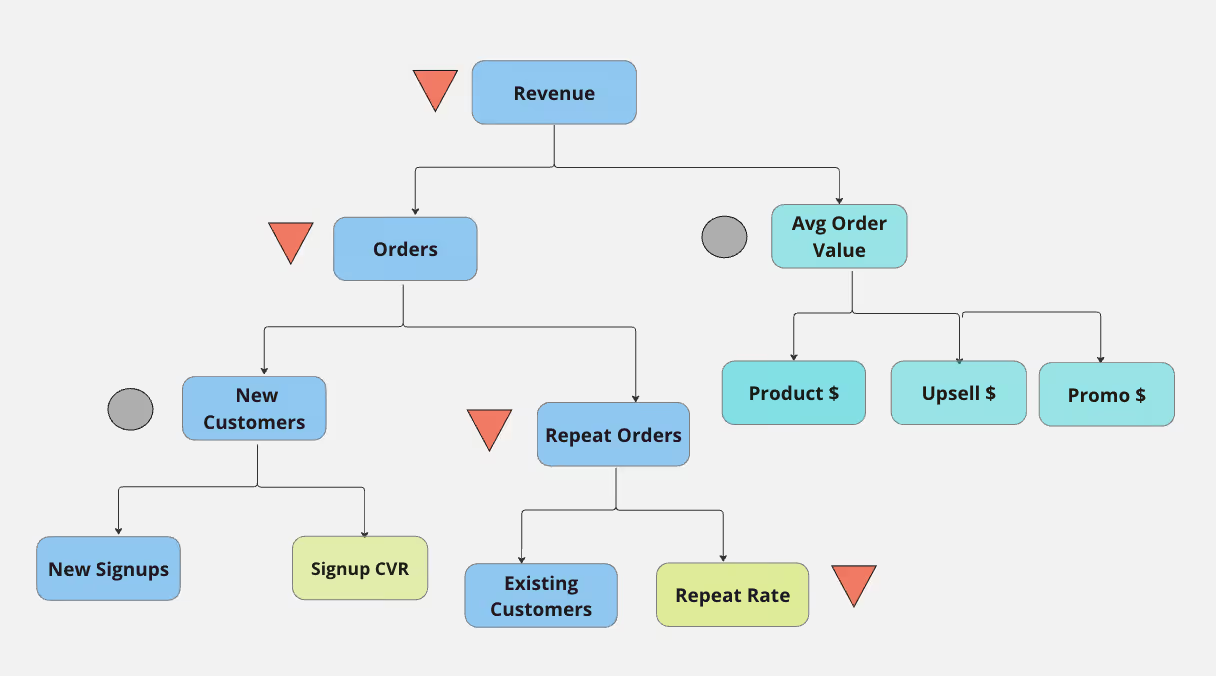
By building tools that help data and business teams collaboratively design and operate on metric trees, the translation friction can be significantly reduced. Or, even practically eliminated depending on the sophistication of the tooling.
This incentivizes more people to participate leading to dramatic improvements in the quality of conversations and decision-making.